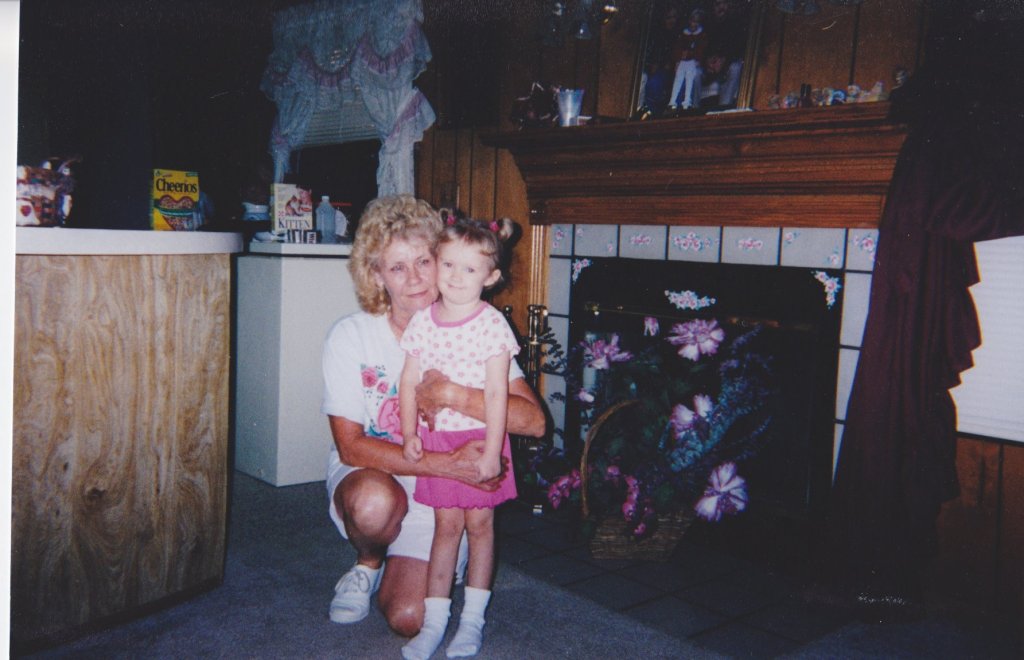
Many hard-working hands have helped to get me where I am right now, from ancestors long before me, to more recent generations. I’ve only gotten to meet a handful of these folks, but my Mamaw, Bonnie, is one that I’ve been lucky enough to know and love.
Mamaw passed away when I was only 13, but I can remember her enthusiastic attitude as if I had just seen her yesterday.
“Standin’ around and talkin’ about it ain’t gonna get it done!” she’d say, laughing as she looked down the hill to see Dad and Papaw standing and chatting by the communal garage.
Of course, she was only playing around. My Dad and Papaw worked just as hard as she always did. But even Dad and Papaw will tell you that Mamaw could work circles around them when she wanted to – which was often. Her banter was playful, but it still spoke volumes about her work ethic.
I genuinely believe that this woman could do a little bit of everything. Just for the 13 years that I knew her, she’d mow the grass and weed eat, take care of the farm animals, and cut and load up firewood. She somehow managed to get all these tasks done while keeping her kitchen clean, and keeping snacks stocked in her cabinets for the grandchildren.
No one could make a better peach cobbler than Mamaw, either. To people like my Mamaw, cooking was no more important than farming, and vice versa. It’s evident that work was not “gendered” for many Eastern Kentuckians. Mamaw was an excellent example of this.
Papaw recently told me about a time when Mamaw worked as a school bus driver. Papaw worked in the mines at this time, getting up to leave for work at 4AM. He was gone in the morning before Mamaw even left for her first route, and he wouldn’t get home until as late as 7 or 8PM.
Instead of sitting down and watching TV or even doing house chores while she awaited her evening shift, Mamaw spent the day working an entire field of tobacco – alone.
When Papaw arrived home from work, he was welcomed by Mamaw sitting in her chair, drinking some ice-cold water. “What have you been doing?” he asked, noticing her unusual fatigue.
She responded by telling him that she “worked the tobacco” all day.
My generation doesn’t see many tobacco fields anymore, but according to Dad, it’s a hot, laborious, tedious job. It’s a multi-step process that certainly doesn’t end in a single day’s work.
Dad said that this specific event was not out of the ordinary for Mamaw. In fact, Dad and Mamaw would often work the tobacco together. He also told me that this is how my grandparents paid for the farm – the beautiful, forested, peaceful area that I’m still living in today.
This is just a small look at what my family did before me. This day and many days like it are why I have a college education, an amazing remote career, my partner, my pets – an overall sense of peace and an incredibly happy life.
These are the tales I want to always remember. This is what Appalachia, and more specifically, Eastern Kentucky, means to many of us.
Thank you, Mamaw. I won’t ever forget what you’ve done to help give me the life that I’m living today.
 Eastern Kentucky Voices